

Hey Finance Engineers,
Okay, I’ll just say it. 9 out of 10 companies I talked to last week weren’t ready for AI. (I’m interviewing CFOs right now as we pivot Fuelfinance, my company, to AI agents - story at the end).
This is the biggest problem in the industry right now, and nobody wants to hear it because the fix is boring: everyone wants AI, but almost nobody spent the last 3 years building the data foundation for it.
I know companies that spent 2-3 years just getting their data ready for automated reports and dashboards. Now they’re ready for AI too. But it didn’t happen in a day, or a week, or a month.
So today is the issue I keep promising. How to actually prepare your data for AI. This one’s not a prompt or a Claude skill.
It’s the 6 layers of checks we run before setting up any agent or automation.
What does the heist movie have to do with AI?
I rewatched Ocean’s Eleven the other night. It hit me: the actual heist takes like ten minutes. The rest of the movie is prep. Blueprints, guard rotations, a literal replica of the vault they built just to rehearse in.
Danny Ocean doesn’t walk into the Bellagio and wing it. The vault scene looks effortless because someone spent months on the boring parts.
And everyone in finance wants the vault scene right now. CEOs especially. (I’m a founder, I get it). Agents running the close. A board deck while you sleep. Nobody wants to be the guy in the warehouse memorizing guard rotations.
Which is how you get the scene I’ve watched all year: a CFO opens Claude, connects it to QBO, asks for a forecast.
And then the numbers are wrong. Because “payroll” lives under four different names across two entities. Because $3M of intercompany was never eliminated. Because February’s bonus run never synced.
You can’t automate chaos. AI just does the wrong things faster.
And in finance, 99% correct is still wrong.
“Clean” for your accountant ≠ “clean” for AI
Ask your accountant if your data is clean and they’ll say yes. And they’re not lying - by their definition, it is. Books close, taxes get filed.
AI needs a different definition. Structured, consistent, connected across systems. QBO, Stripe, your CRM, payroll, ops tools - each one holds a piece of the picture, and the model can only reason across them if they actually agree with each other.
Here’s the full cleanup we run before any dashboard, forecast, or agent goes live. Real numbers from real cleanups (anonymized, obviously).
Layer 1. Category mapping & chart of accounts
One reporting structure. Not one per entity per era per bookkeeper.
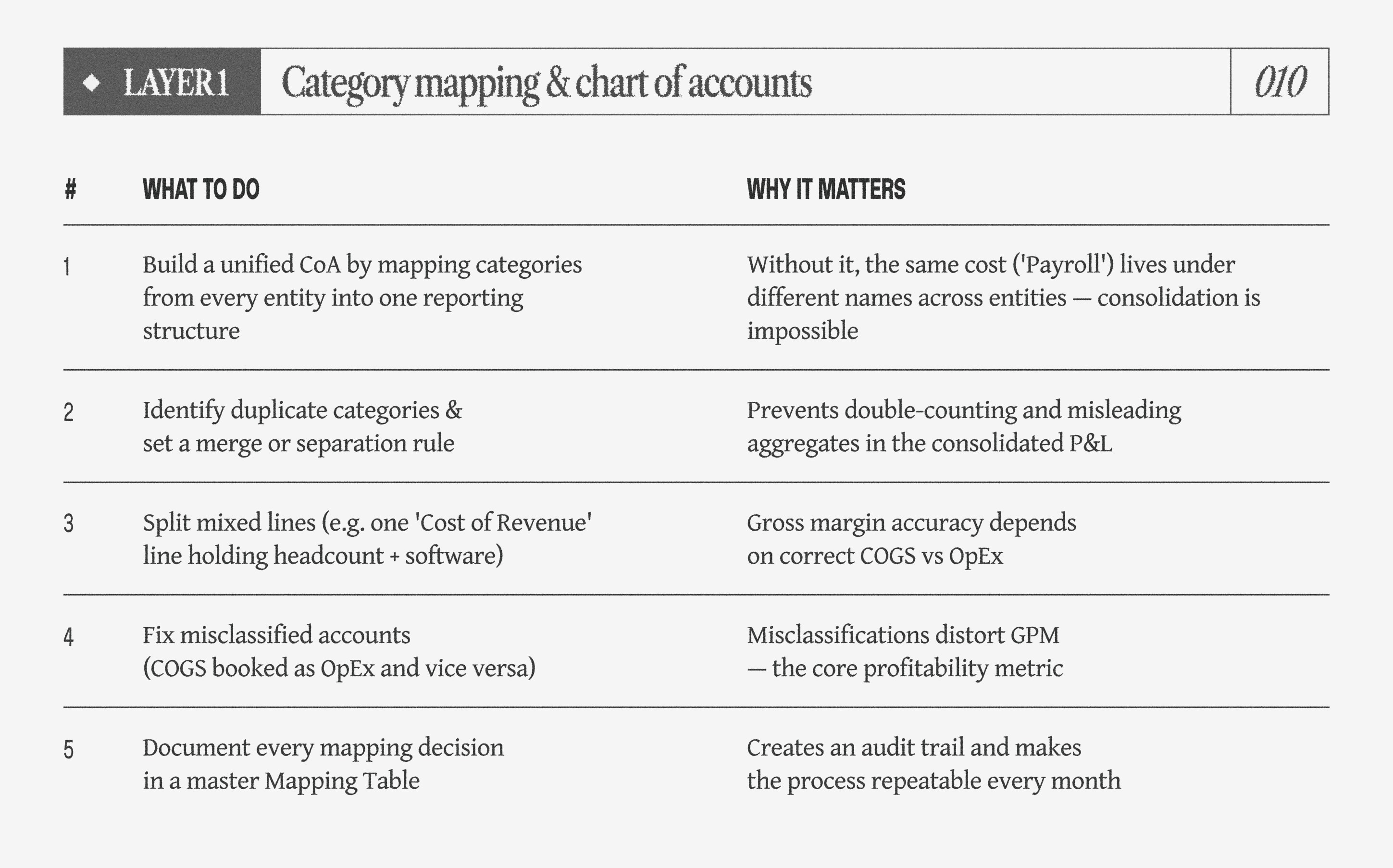
Real example: a client’s payroll showed $95K/month as a single line in QBO. After mapping it against the payroll system, $61K belonged in COGS. Gross margin error: 12 percentage points. Every AI analysis of that P&L before the fix was fiction.
Layer 2. Intercompany elimination
If you have more than one entity, this is where consolidated numbers go to lie.
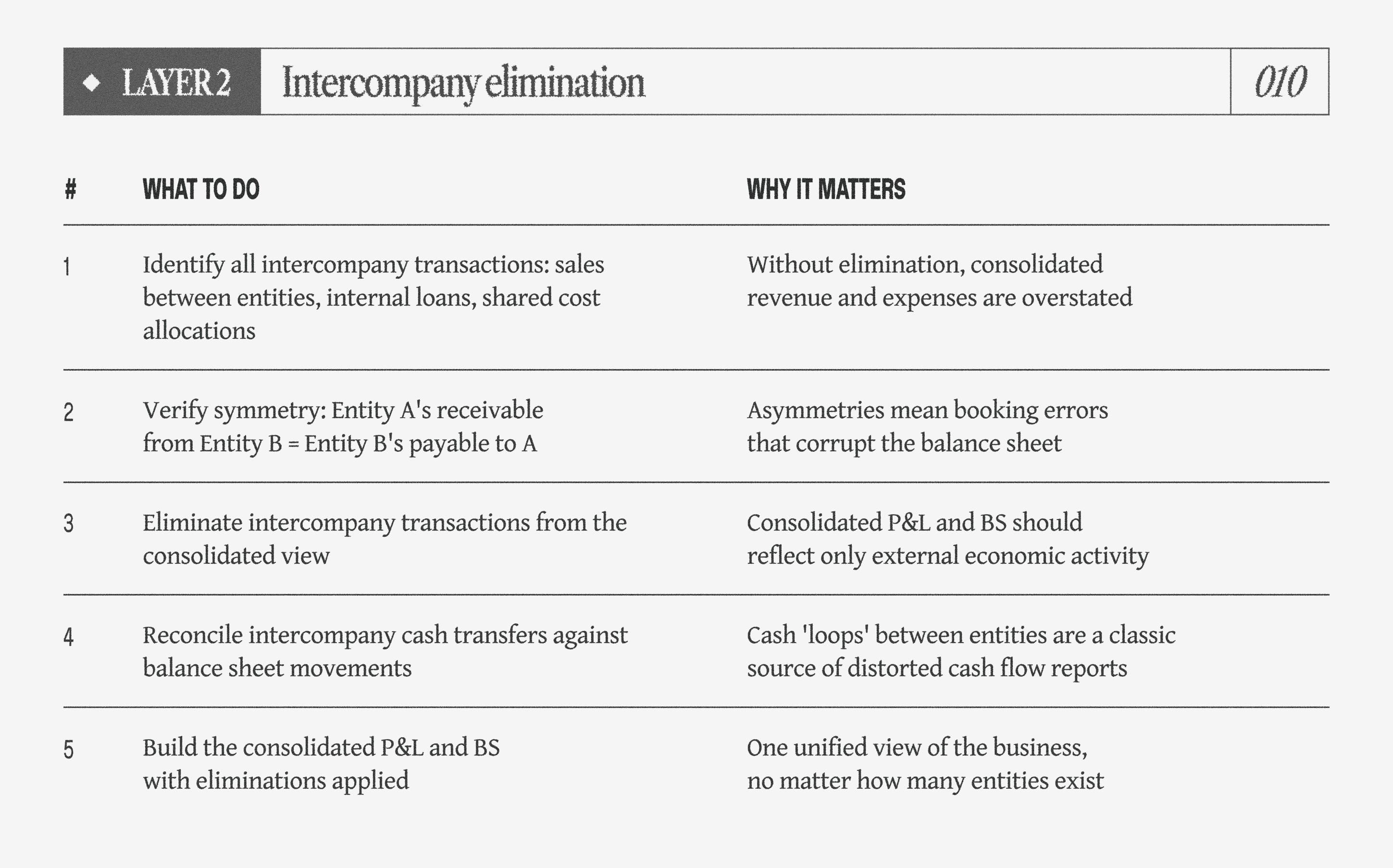
Real example: a balance sheet showed $204K cash; the bank showed $189K. The gap: a $15K transfer between two entity accounts, recorded as income in one and never eliminated. Claude will happily forecast off that phantom $15K forever.
Layer 3. Splits & allocations
One line in QBO is not a data model.
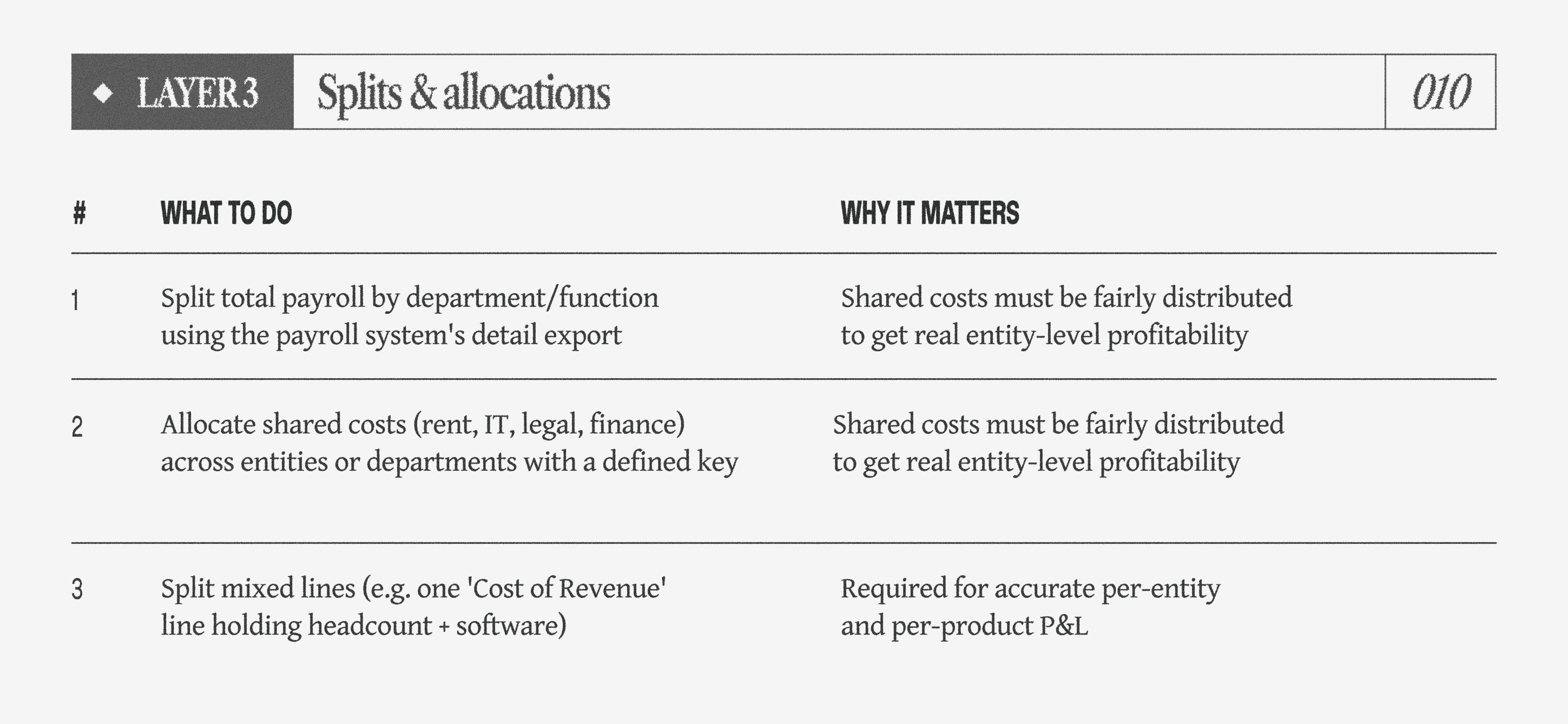
Without this layer, “analyze our R&D efficiency” is a prompt with no possible correct answer.
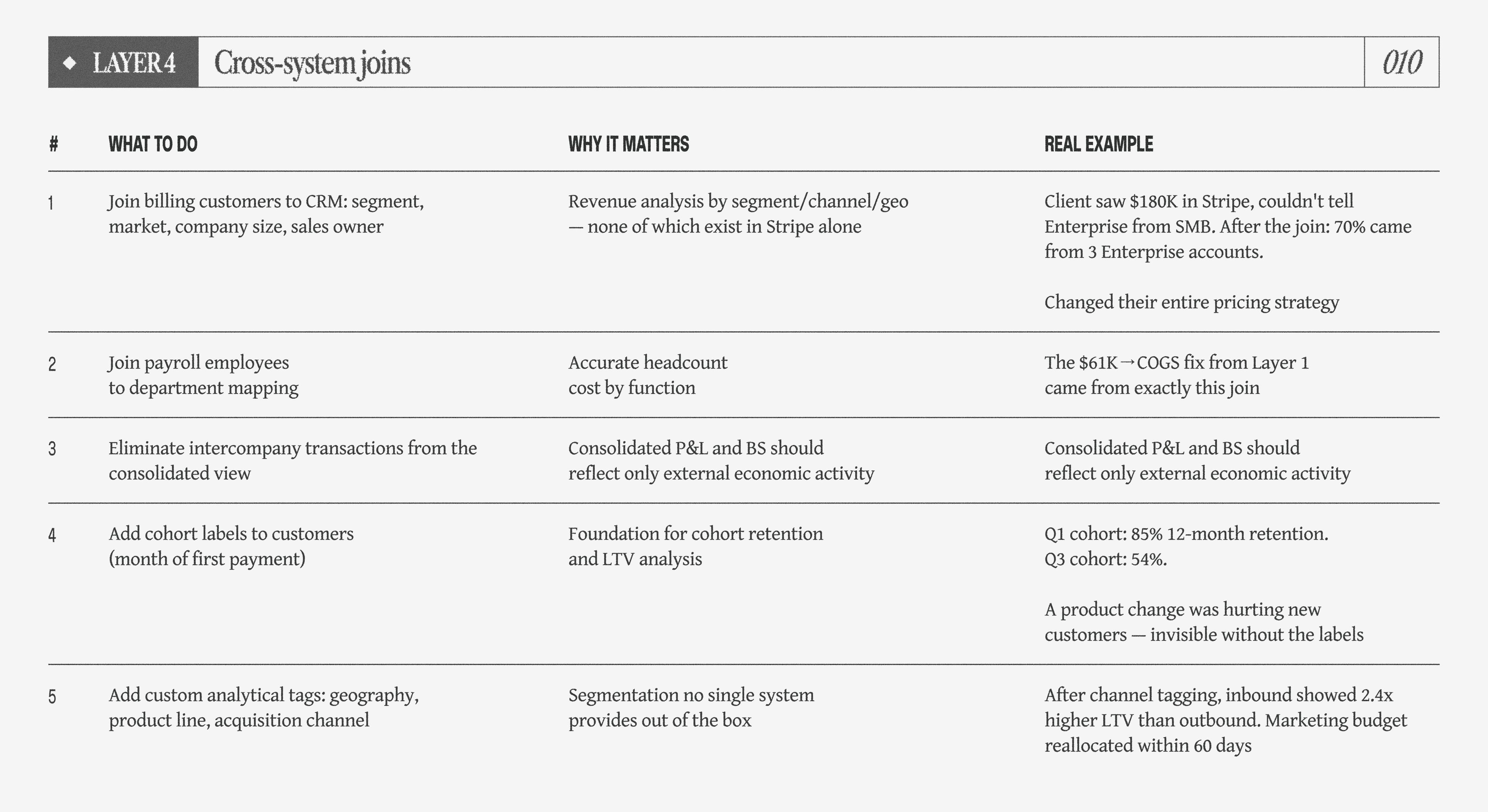
Layer 4. Cross-system joins
This is where the actual analytical power lives. Each system holds a piece of the picture. Connect them.
Layer 5. Outlier detection
Anything weird gets flagged before it enters the run-rate.
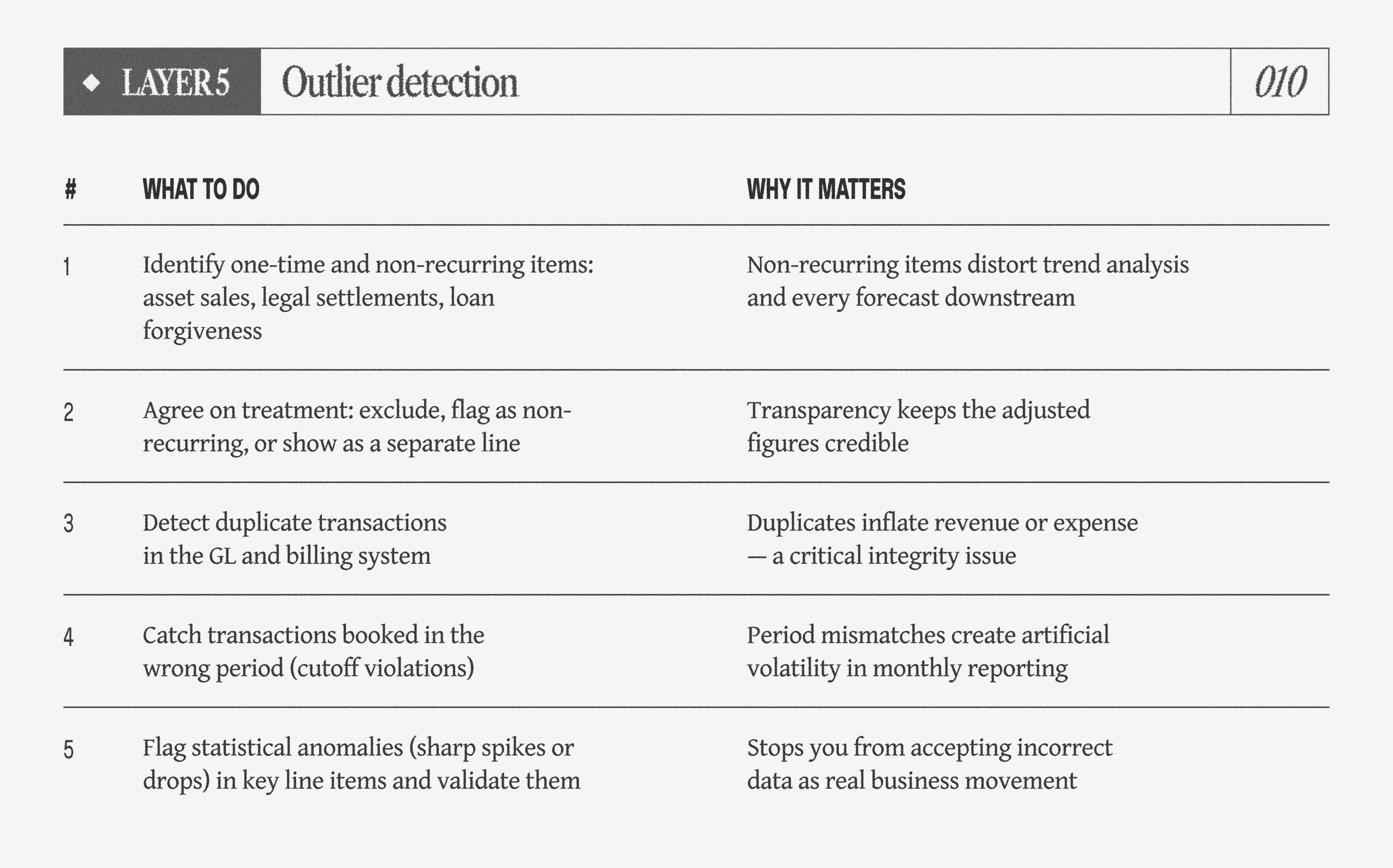
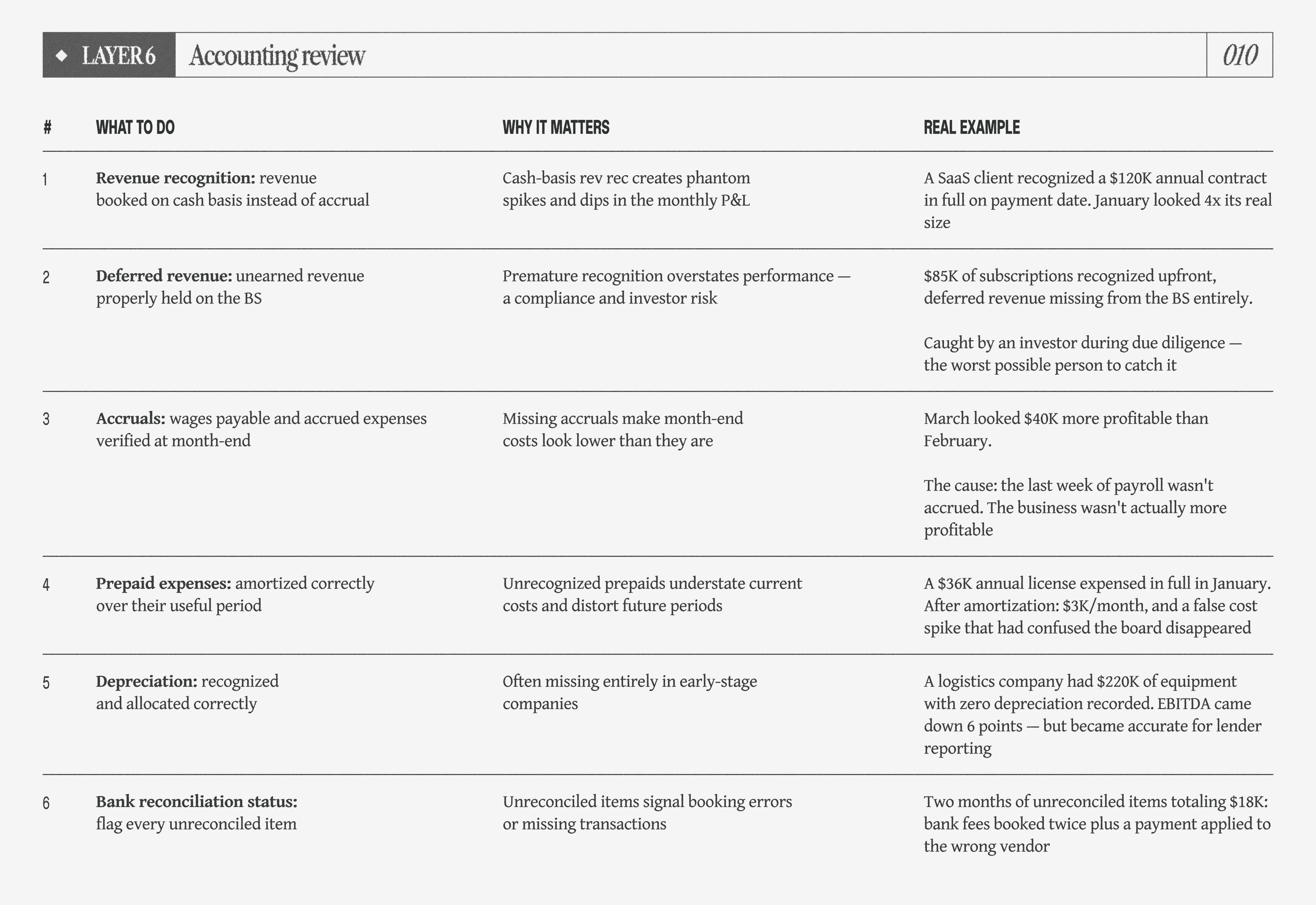
Layer 6. Accounting review
The most value-dense layer and the most overlooked. Most fast-growing companies have accounting gaps that create noise in every report.
The final gate: cross-system reconciliation
One question: do the numbers in each system tell the same story? If they don’t, find out why before anything downstream gets built.
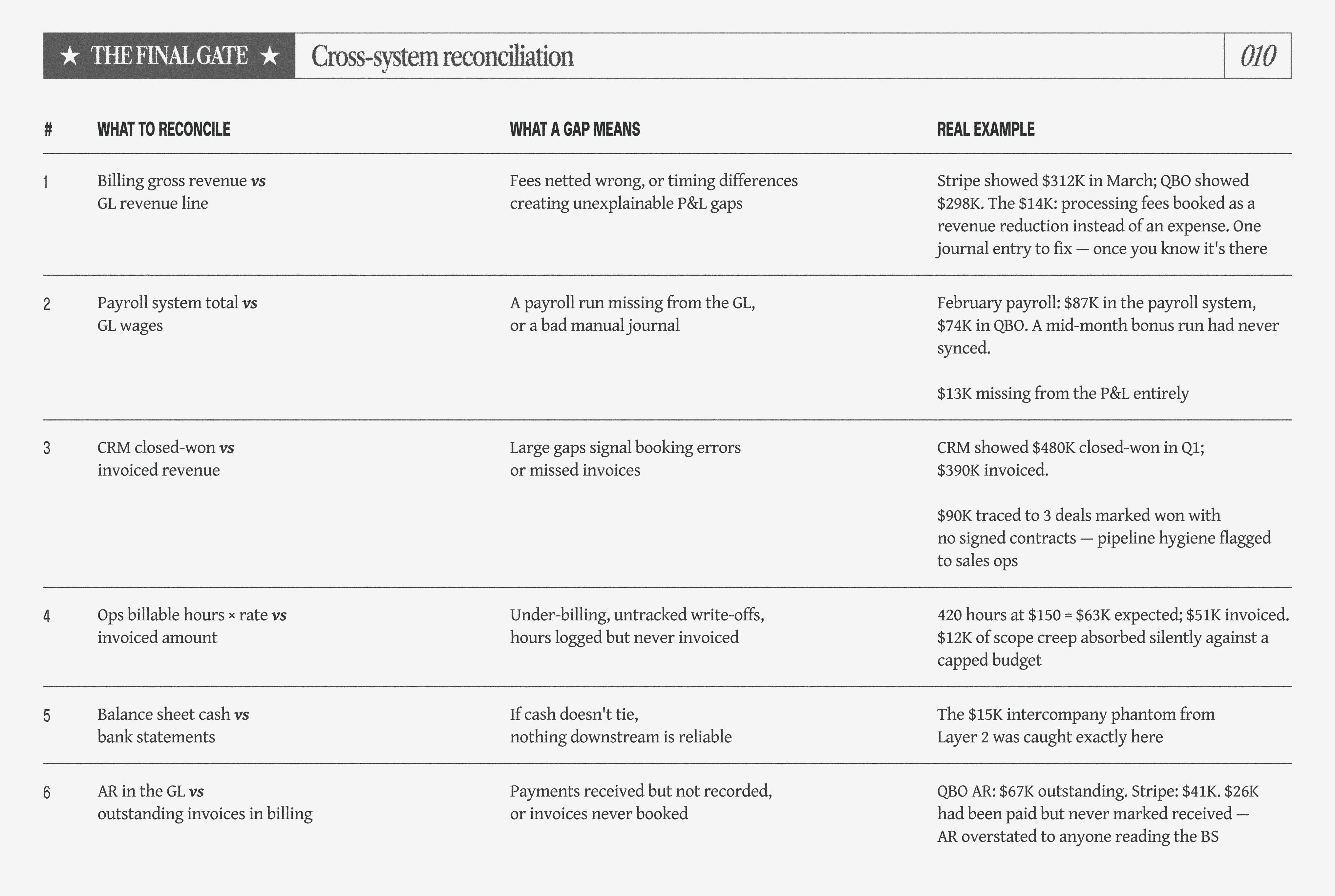
Funny thing about every example above: not a single one was an AI problem.
“But models keep getting smarter”
I know. Won’t Fable-level models just… handle the mess?
Honestly, I wish. It’s the opposite. Remember the human-in-the-loop issue - the better the output looks, the less you double-check it. A smarter model gives you a more convincing analysis of your broken data. It finds patterns in your duplicates. It writes a whole confident story about a margin trend that’s actually a missing accrual.
The output gets prettier while the numbers stay exactly as wrong.
That’s why data is Level 0.
Step 0, in one checklist
Before you build a single skill, honestly answer:
Is there one chart of accounts - or one per entity per era per bookkeeper?
Does revenue in your billing system match revenue in your GL? To the dollar, or to a known, explained gap?
Does balance sheet cash tie to bank statements?
Is intercompany eliminated in every consolidated view?
Do you know where every number in your board deck comes from - one source of truth, or six spreadsheets that “kind of” agree?
Are one-time items flagged and out of the run-rate?
Can’t check most of these?
Then you’re not ready for AI, you’re ready for a cleanup. Which is fine!! That IS the first step. Initial cleanup takes ~2 weeks depending on entities and the state of the books (sometimes a couple of months, I won’t lie to you). Then you get your vault scene.
Imho, the finance engineers who win with AI won’t be the ones with the best prompts and skills. They’ll be the ones whose data deserves the prompts.
Subscribe (and stay for the ride)
If you made it this far, you’re one of us. Subscribe for the weekly drop.
Every issue: my real builds, step by step - the prompts, the skill files, the screenshots, and the mistakes I made so you don’t have to. Plus interviews with finance engineers, starting soon.
Pro subscribers get the full library: every skill file and prompt from every issue, deeper tutorials and behind-the-scenes builds, and the subscriber chat, .md files, and what’s actually working in our workflows.
→ If you’re a vendor and you genuinely have something to offer this audience, email me at team@thefinanceengineer.io or DM me on LinkedIn.
How are things going at your company, Alyona?
New thing I want to try: sharing the personal side at the end of each issue.
Last week I posted something I never thought I’d post. That Fuel, as it was, didn’t find product-market fit. Six years of building, ~$3M ARR, a full demo calendar, great feedback - and still. You can feel when it’s PMF and when it isn’t. It wasn’t. Typing that sentence publicly took me about a week.
So we’re taking 3 months to rebuild the company around AI agents that run FP&A. Agents doing the work (close the month, run variance analysis, update the forecast) with a human finance engineer reviewing and approving. We rebuilt one customer’s entire month-end close this way, and 7 days of work became 2. That call is the reason we’re betting the company on this.
Do I know how it ends? No. That’s kind of the point of sharing it now and not after it worked. I’m documenting the pivot weekly in videos on LinkedIn, and the longer thoughts will live here - at the end of each issue, or sometimes as standalone posts.
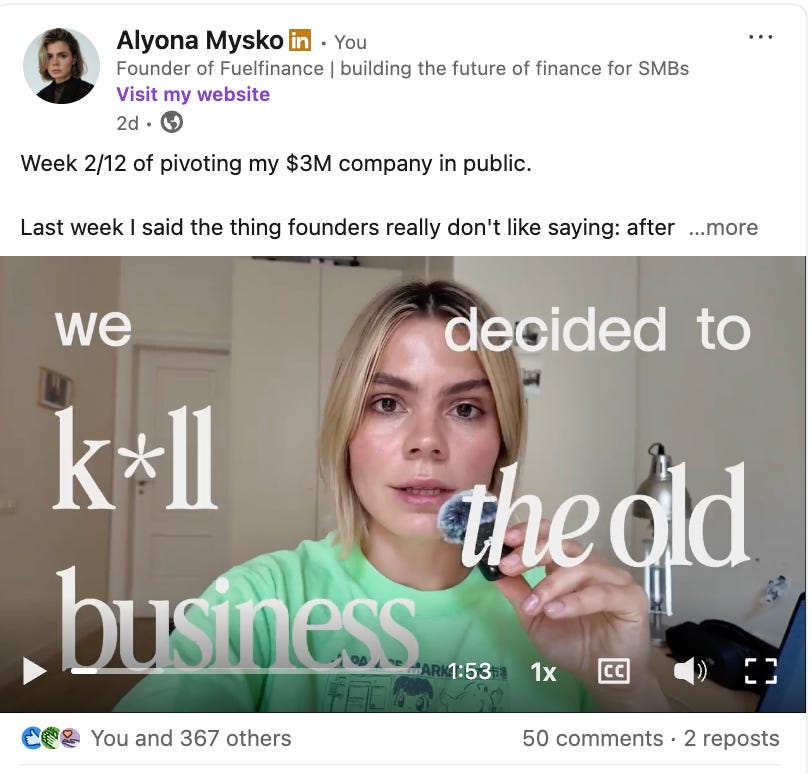
Write in the comments: what would your team hand to an agent first?
Till next week,
Alyona